The Origin Of Engagement And Wedding Rings
Ancient Civilizations
1. Ancient Egypt: The tradition of wearing rings as a symbol of commitment dates back to ancient Egypt, around 2800 BC. Egyptians believed that the circle represented eternity, and the ring was worn on the fourth finger of the left hand, as they believed it had a vein that directly connected to the heart. 2. Ancient Rome: In ancient Rome, betrothal rings were given as a sign of intent to marry. These rings were usually made of iron, symbolizing strength and permanence. It was also common for these rings to be engraved with romantic symbols or inscriptions. 3. Ancient Greece: Greek engagement rings were often made of precious metals like gold or silver and adorned with gemstones. These rings were considered a sign of ownership, as they were given by the groom to the bride's father as a dowry. They were worn on the left hand's third finger, which was believed to have a vein directly connected to the heart. 4. Medieval Europe: During the Middle Ages, engagement rings became more elaborate and ornate. Rings were often engraved with intricate designs or featured gemstones, and they were given as a sign of love and commitment between couples. Diamond rings began to gain popularity during this time, symbolizing purity and everlasting love.


6. Victorian Era: In the 19th century, Queen Victoria's reign popularized sentimental and symbolic jewelry, including engagement rings. Rings during this era often featured clusters of gemstones arranged in intricate designs, such as flowers or hearts. The use of birthstones and colored gemstones also became fashionable during this time. 7. Modern Era: The modern engagement ring as we know it today gained popularity in the 20th century. In 1947, De Beers launched their famous marketing campaign with the slogan "A Diamond is Forever," which solidified the association of diamonds with engagement rings. Diamond solitaire rings, featuring a single diamond on a simple band, became the most popular choice for engagement rings.
The Third Wonder Of The Ancient World
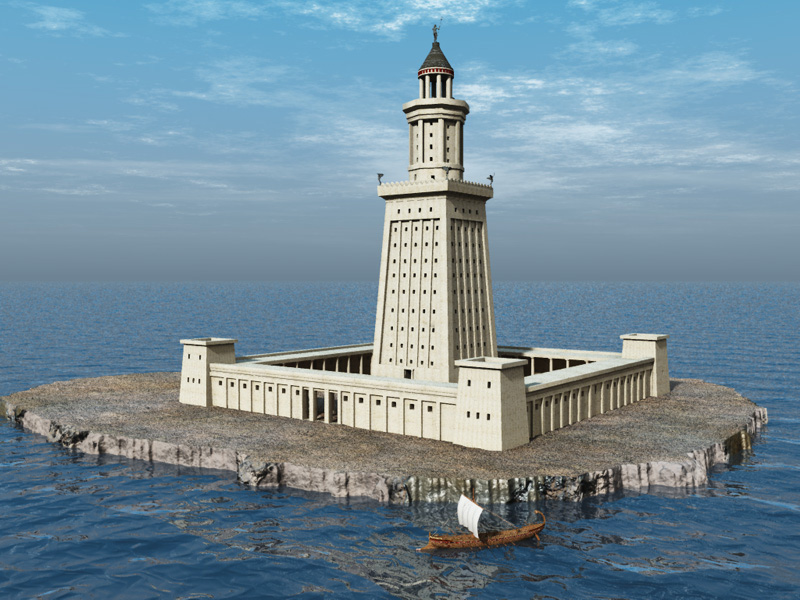
The Lighthouse of Alexandria
1. Historical Background: It was built on the island of Pharos in the city of Alexandria, which was a major center of trade and culture in the ancient world. 2. Architectural Style: The architectural style of the lighthouse was influenced by both Egyptian and Greek traditions. It was designed by the Greek architect Sostratus of Cnidus and is believed to have been a tall tower-like struc...