African Tree Of Life
The Baobab Tree
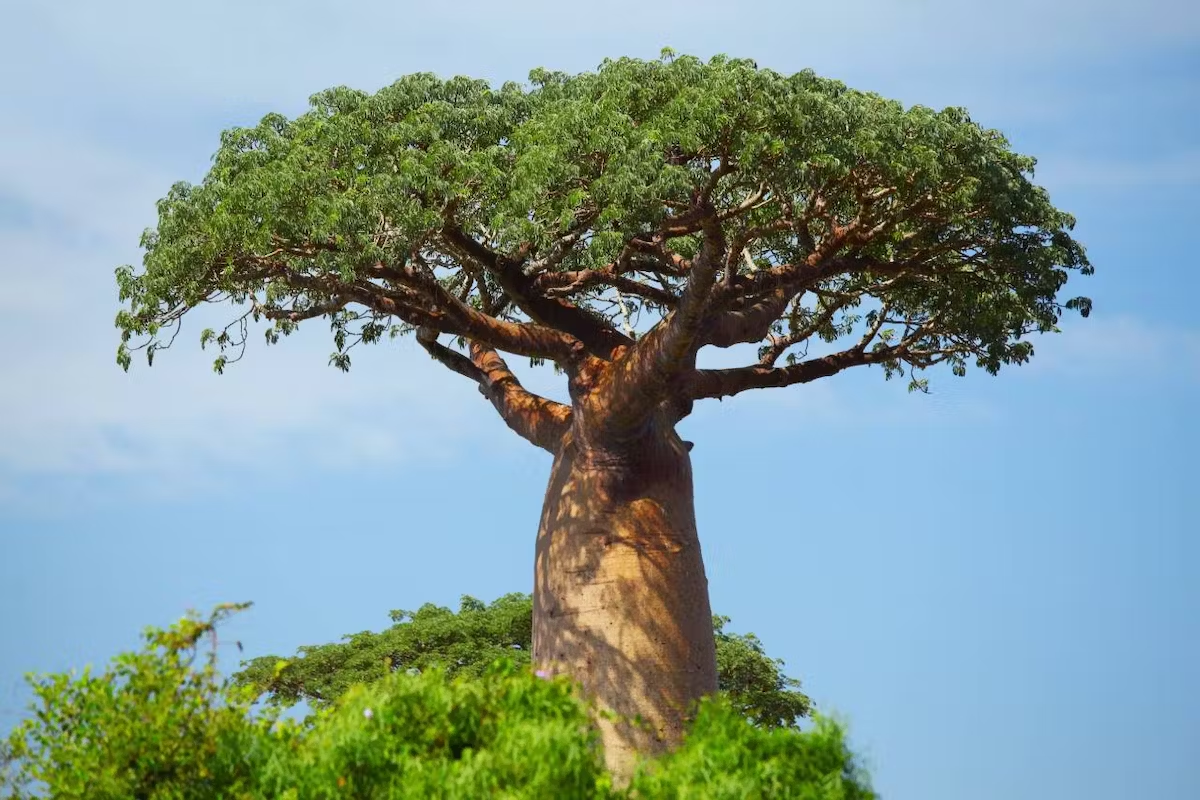
1. Appearance: Baobab trees have a massive and stout appearance, with thick trunks that can reach up to 30 meters (98 feet) in height and 10-14 meters (33-46 feet) in diameter. The trunk is often bottle-shaped, swollen, and covered with smooth, reddish-brown bark. . Longevity: Baobab trees are known for their exceptional longevity, with some specimens estimated to be over 6,000 years old. They are among the oldest living organisms on Earth. 3. Leaves: The Baobab tree has compound leaves composed of 5-9 leaflets. The leaflets are elliptical in shape and are shed during the dry season to conserve water. 4. Flowers: Baobabs produce large, white or cream-colored flowers that bloom at night. The flowers are pendulous and have a strong fragrance to attract nocturnal pollinators like bats and moths. 5. Fruit: The Baobab tree bears large, woody fruits known as "monkey bread" or "superfruit." The fruit is oval-shaped and can grow up to 20 centimeters (8 inches) long. It has a hard shell that encloses powdery pulp and numerous seeds.

6. Nutritional Value: Baobab fruit pulp is highly nutritious and rich in vitamin C, calcium, potassium, magnesium, and dietary fiber. It also contains antioxidants and has been used for centuries in traditional medicine for its various health benefits. 7. Uses: Baobab trees have numerous practical uses for local communities. The leaves can be used as a food source, and the bark can be used for making ropes, baskets, and clothing. The fruit pulp is consumed fresh or dried to make juices, jams, and powders used in smoothies, desserts, and traditional dishes. 8. Water Storage: Baobabs have adapted to arid environments by storing large amounts of water in their trunks during the wet season, which they use to survive during periods of drought. 9. Cultural Significance: Baobab trees hold great cultural and spiritual significance in many African communities. They are often considered sacred and are associated with wisdom, strength, and longevity. Baobabs are also popular subjects in African folklore and art. 10. Conservation Status: Despite their cultural and ecological importance, many Baobab species are facing threats due to habitat loss, climate change, and unsustainable harvesting. Some Baobab species are listed as endangered or vulnerable. 
Little Time Of Trouble To Honor Sunday
But can still worship on Sabbath
The law to honour and worship on Sunday will lead to an increase in social pressure including a little time of trouble and many adventists will compromise. This will be the beginning of the mark of the beast crisis. As the storm approaches, a large class who have professed faith in the Third Angels Message, but have not been sanctified through obedience to the truth, abandon their position and join the ranks of the opposition. By uniting with the w...